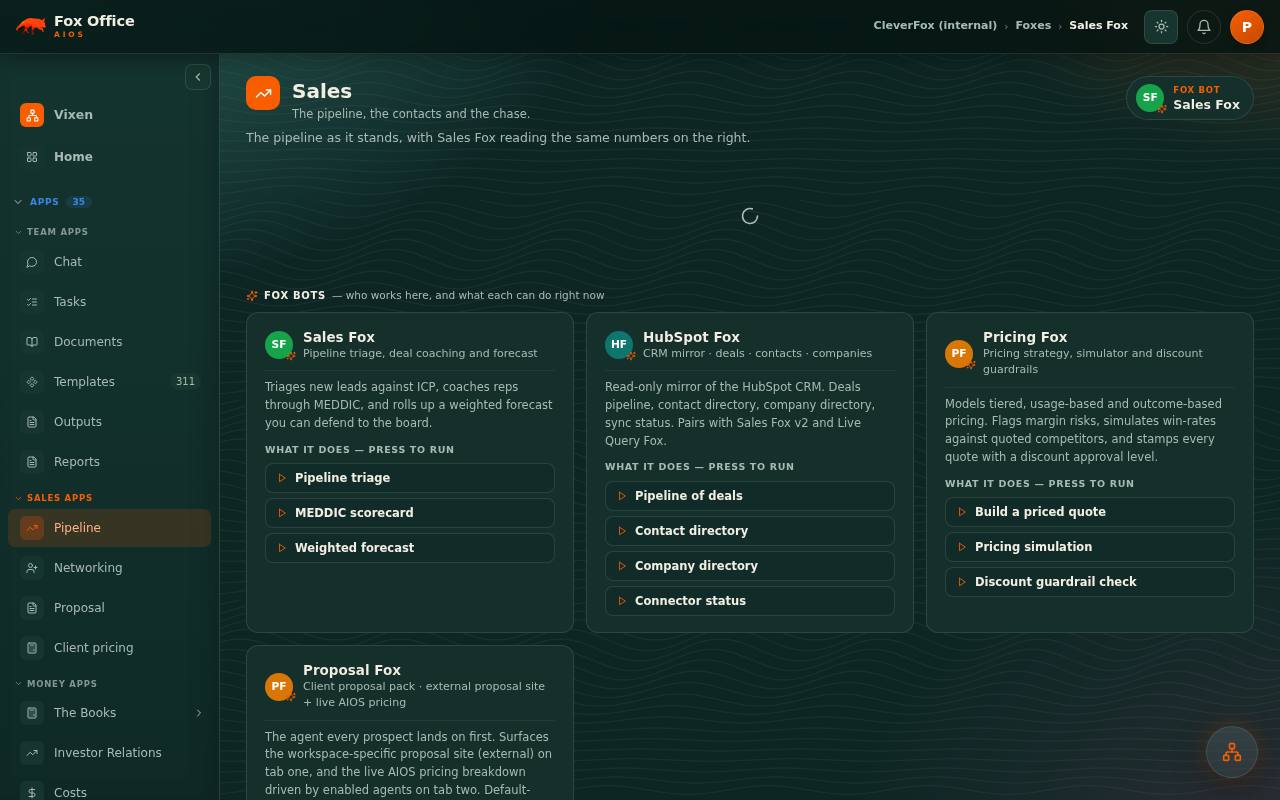
Pipeline
Deals, stages and next-best-step, with the email trail attached to each one.
An AI operating system that sits on top of your existing stack. It connects every app and every dormant data source into one place you can actually ask questions of - and puts 130+ AI agents to work on the admin underneath.
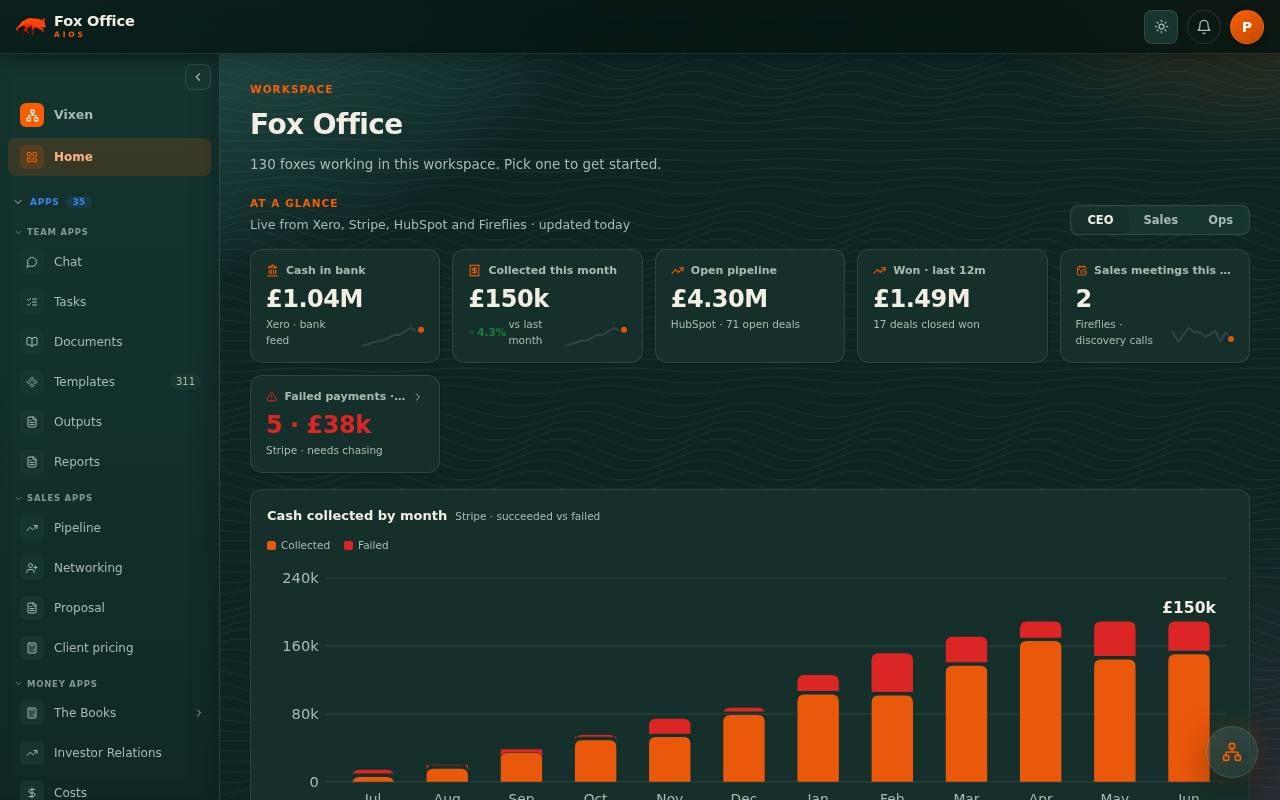
Since SaaS arrived, businesses have accumulated tools one function at a time. A CRM. Accounting software. Something for marketing. A UK SME now runs ten to twenty of them.
Each one is built for a sector, not for your business - so each covers maybe 60 to 70% of the workflow it's meant to own. Your team covers the rest by hand: switching between tabs, re-keying the same figures, copying from a spreadsheet into software and back out again.
And the thing you're actually sitting on - years of your own data - lies dormant, split across twenty places that don't talk to each other.
Nobody wants to replace twenty SaaS apps with twenty AI SaaS apps. They want one system, one interface, that doesn't take months of training to use.
separate SaaS tools in a typical UK SME
of a workflow covered by the app that owns it - the rest is manual
AI agents ready to take the repetitive admin
of your team's time back, without hiring
Fox Office is a layer, not a replacement. It connects your existing apps and your historical data into a single source of truth - a data super-brain you can interrogate by voice or in plain language. Nothing gets ripped out.
Lower-cost digital labour for the admin nobody enjoys - matching invoices, chasing payments, screening, scheduling, reporting. Your people get 30 to 50% of their week back for work that actually needs them, and you grow without adding headcount.
Modular and customised to the way your business actually works. Unlike the software you've bought before, it evolves with you - and your team can adjust and add functionality themselves, in real time, without raising a ticket.
Each agent owns a slice of the business and has the tools to act on it, not just describe it. Accounting Fox matches invoices and chases what's outstanding. Sales Fox knows the pipeline and the email trail and tells you the next best step. Daily Fox writes the morning brief and the end-of-day report.
The workspace shows which agents are ready and which are blocked - connect Xero and eleven come online at once. Nothing runs behind your back: you enable each one deliberately, and you see what it did.
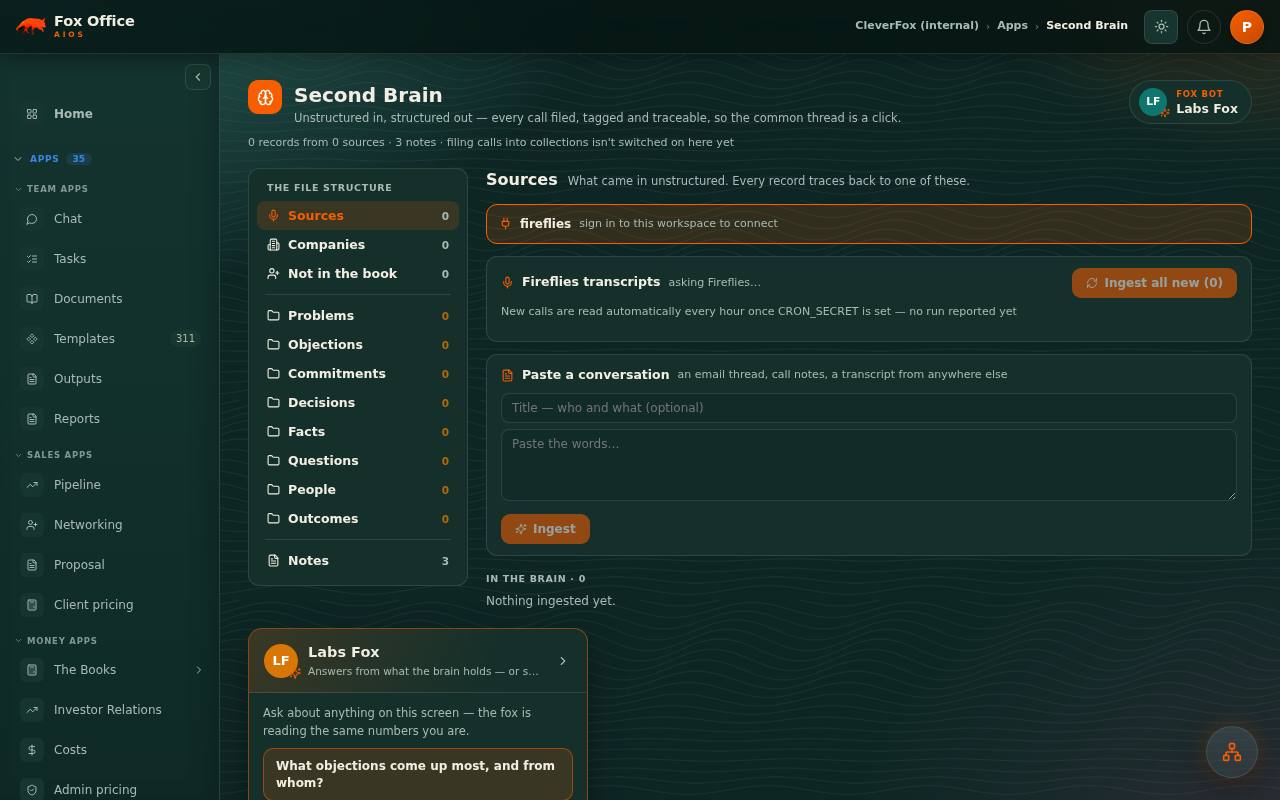
This is the part that doesn't exist anywhere in your current stack. Calls, email threads and notes go in unstructured and come out filed: problems, objections, commitments, decisions, facts, people, outcomes. Transcripts are ingested automatically.
Ask it which objections come up most and from whom, and the answer cites the calls it came from. Six months of conversations become a click instead of an afternoon.
Connect the ledger and this builds itself: what's actually yours to spend once tax is set aside, what's owed to you, what's already earned and taxed, and the next filing deadline with the days left on it.
Deadlines radar for VAT, annual accounts, corporation tax and confirmation statements. A warning when tax owed outruns cash in the bank - before it's a problem rather than after.
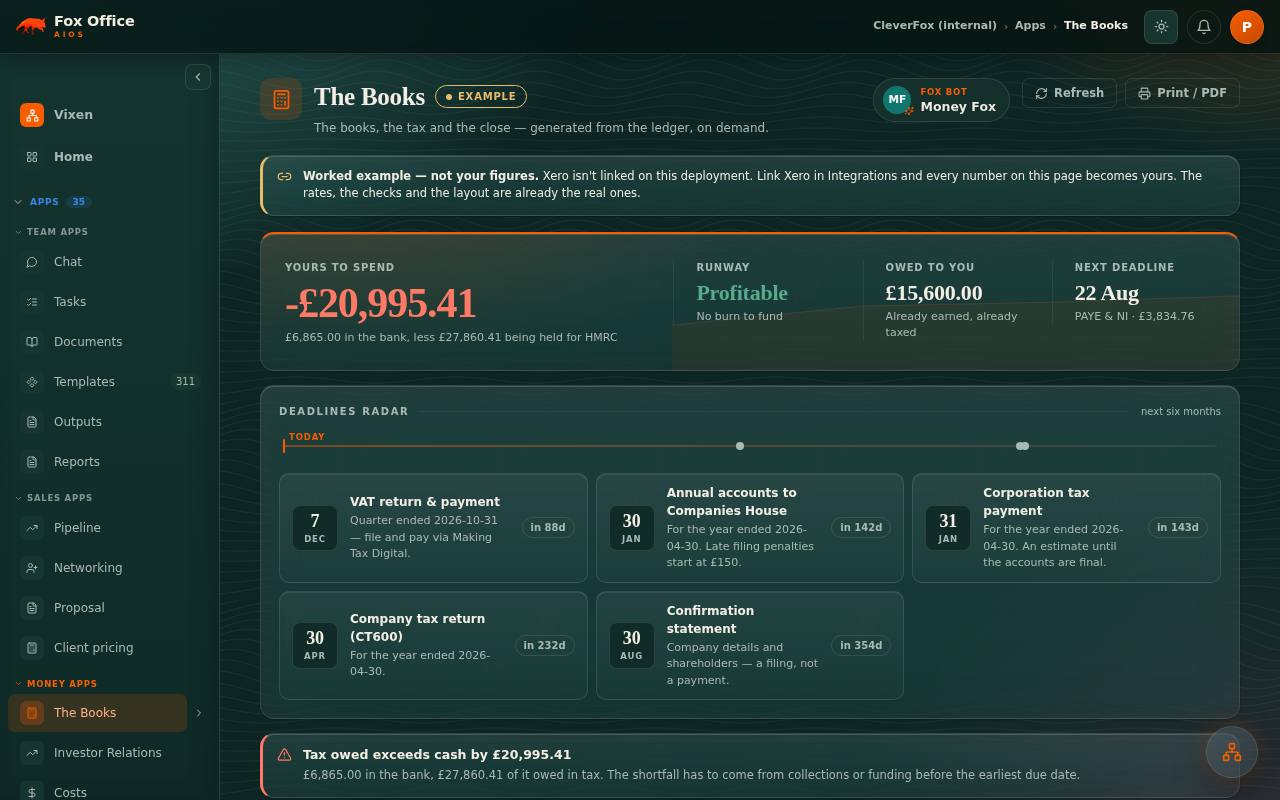
The workspace, the apps and the agents, in the order you'd meet them.
The work your twenty tools were doing separately, in a single place - with no training course attached.
Deals, stages and next-best-step, with the email trail attached to each one.
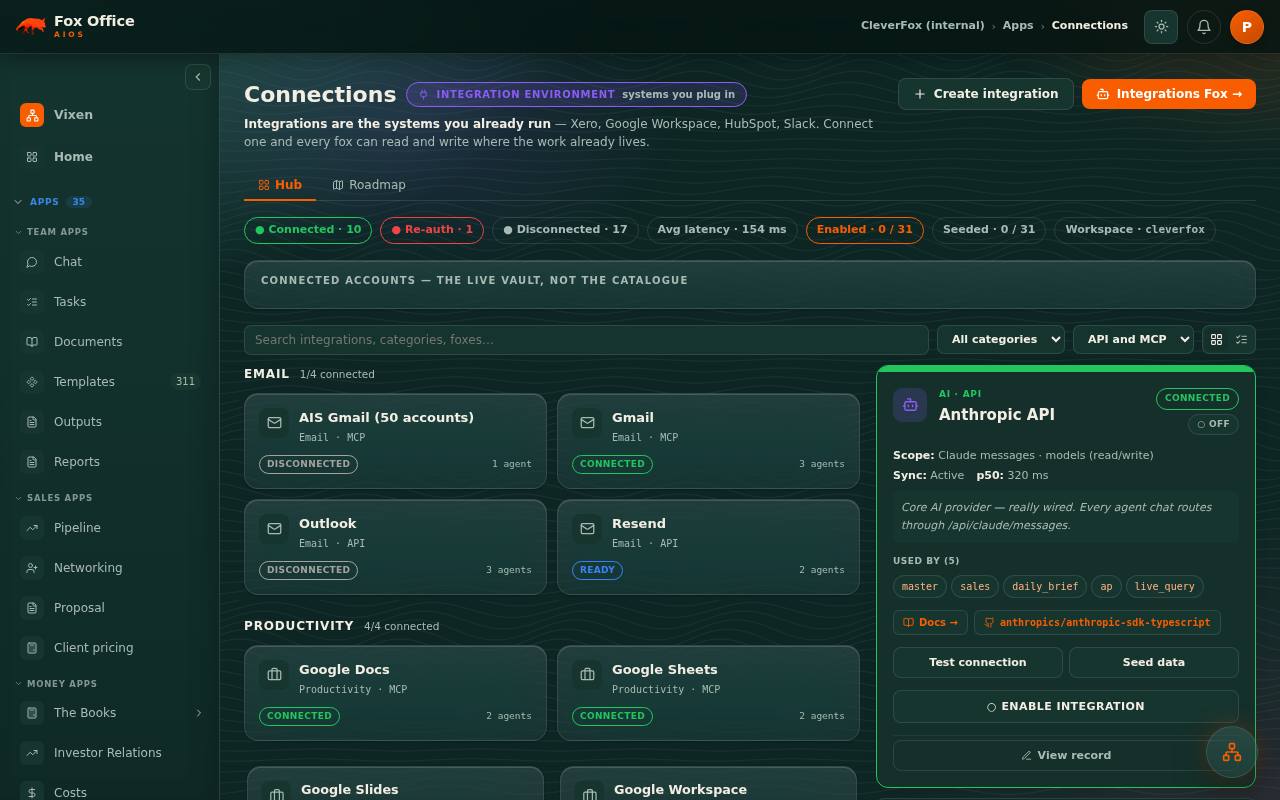
Every system you already run, what it's syncing, and which agents depend on it.
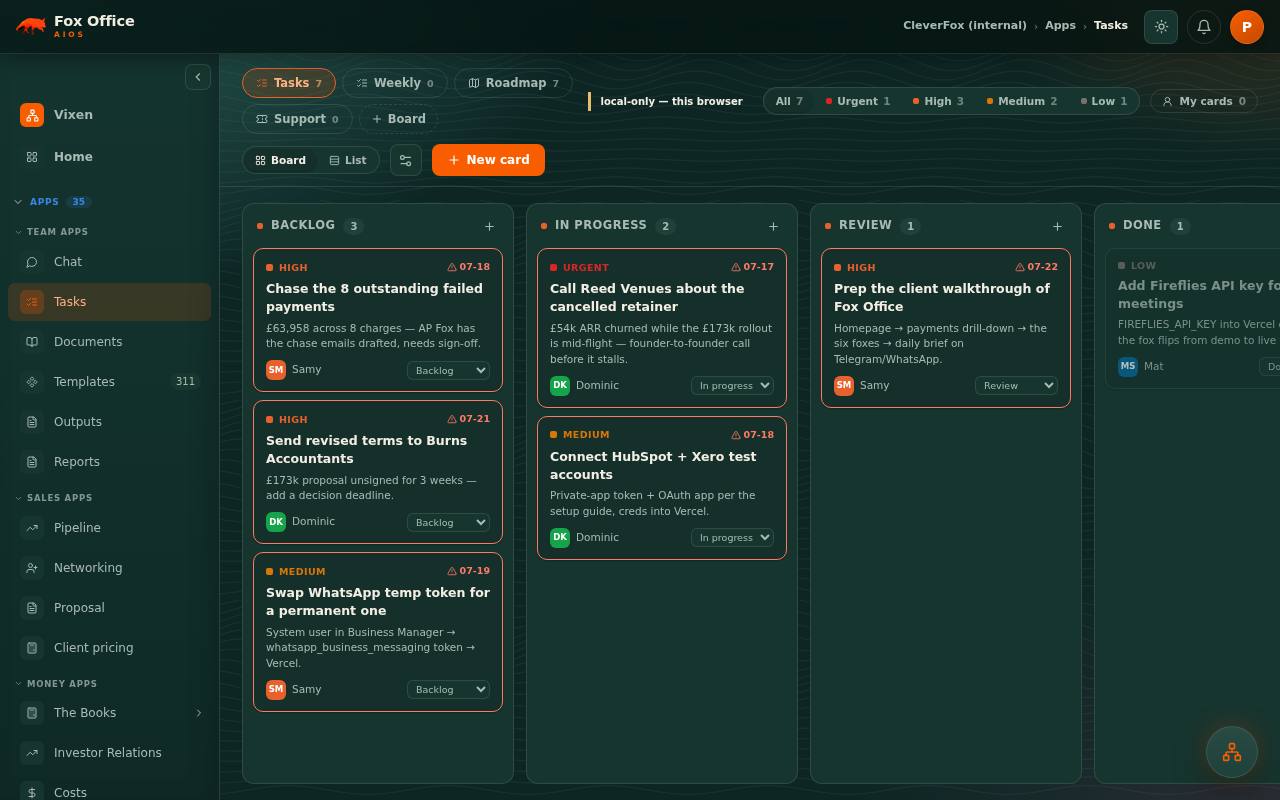
Work assigned to people and to agents, tracked in the same place.
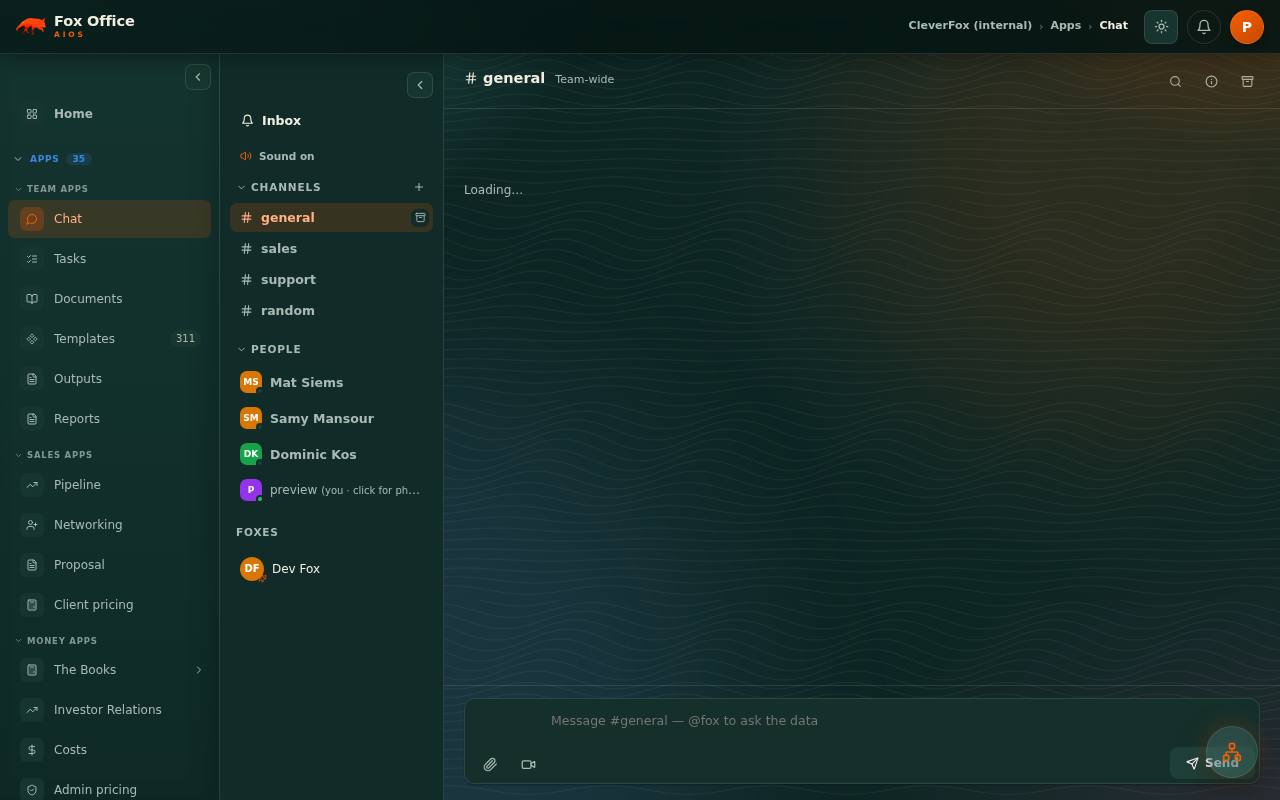
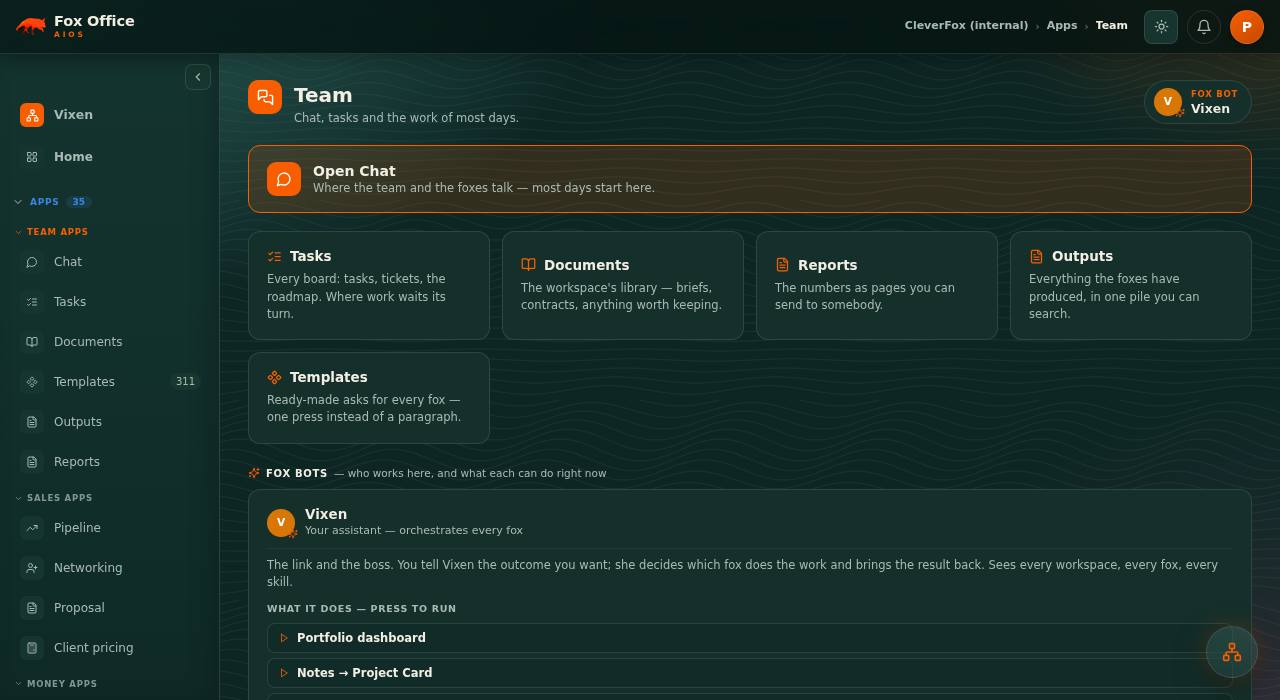
Team conversation with the agents in the room and the context already loaded.
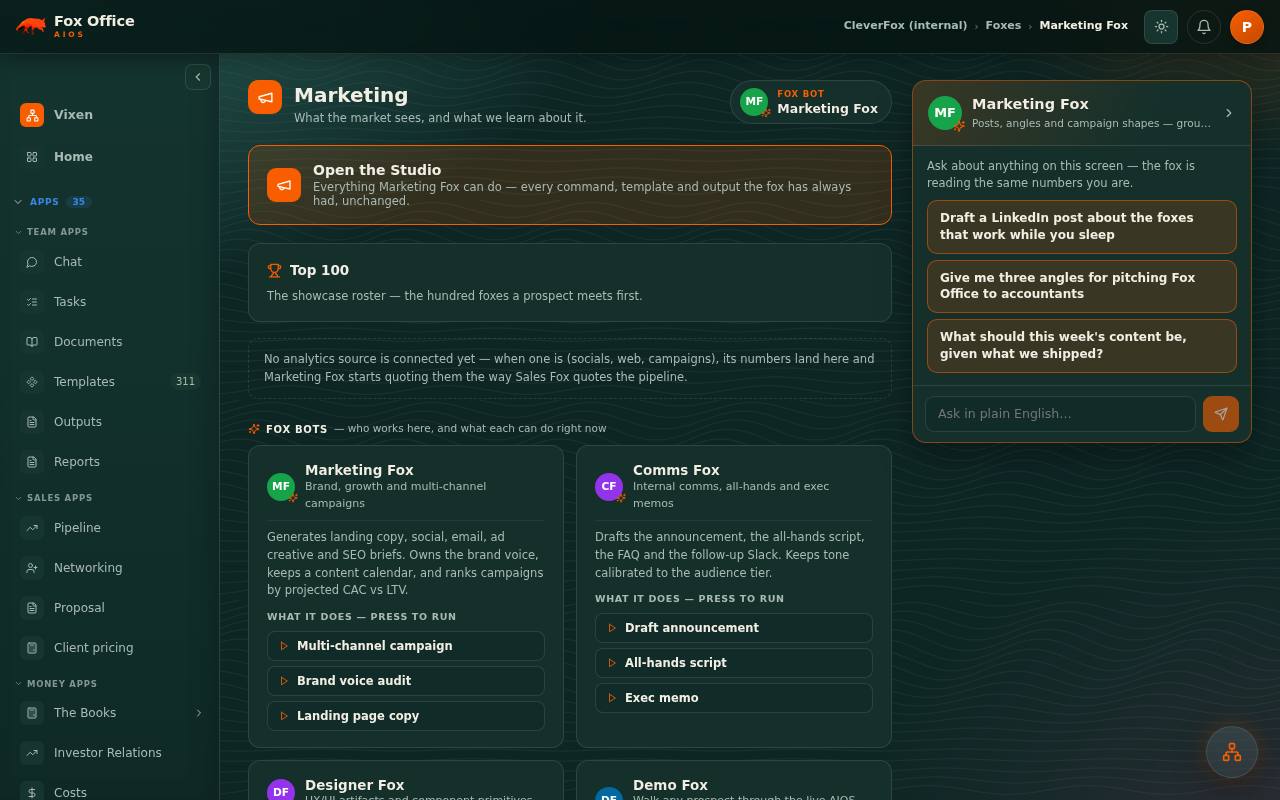
Content, campaigns and social, generated against your company brief.
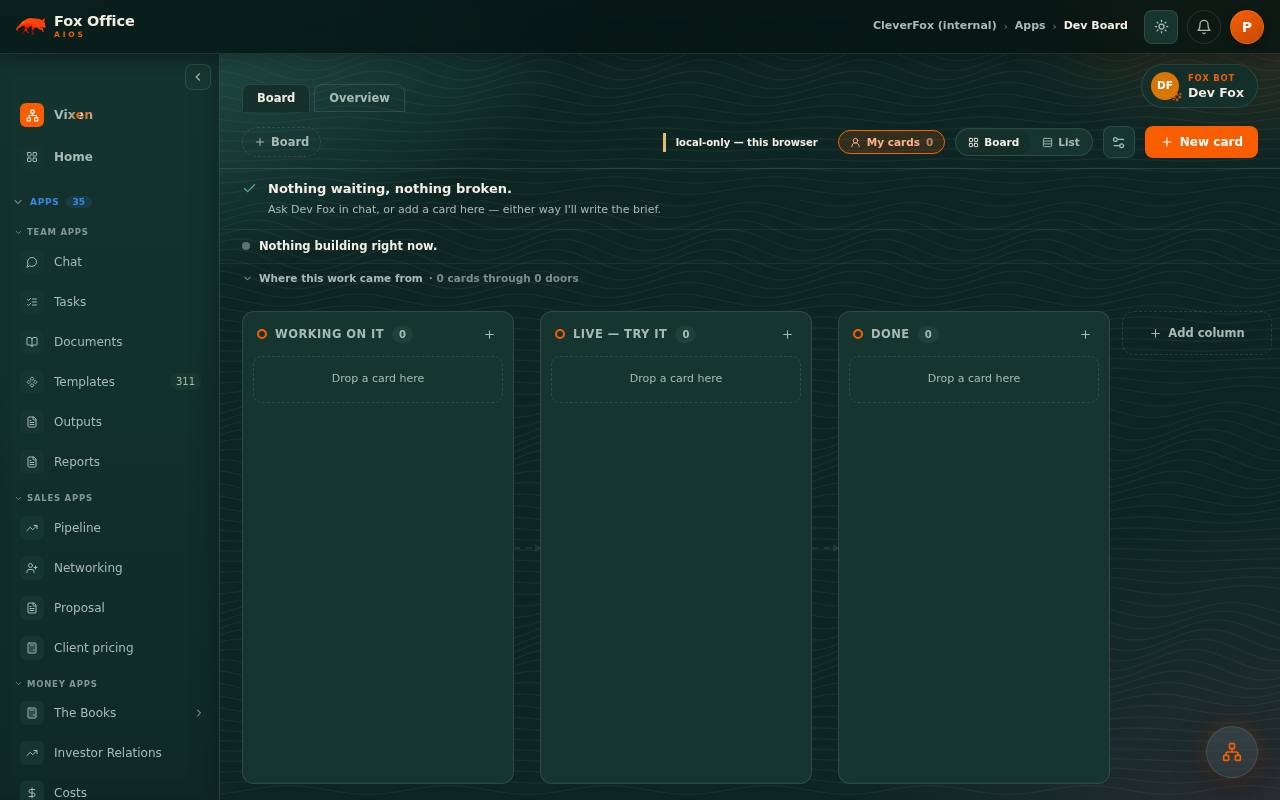
Specs, backlog and build prompts, so what gets shipped matches what was agreed.
Plus Labs, where new agents get built and tested - MiroFish simulates how a market reacts before you bet on a decision, and Inspiration turns anything you paste at it into an idea card on the roadmap.
One interface, not twenty. Light or dark, desk or phone - the same workspace, the same data, the same agents, whichever screen someone happens to be in front of.
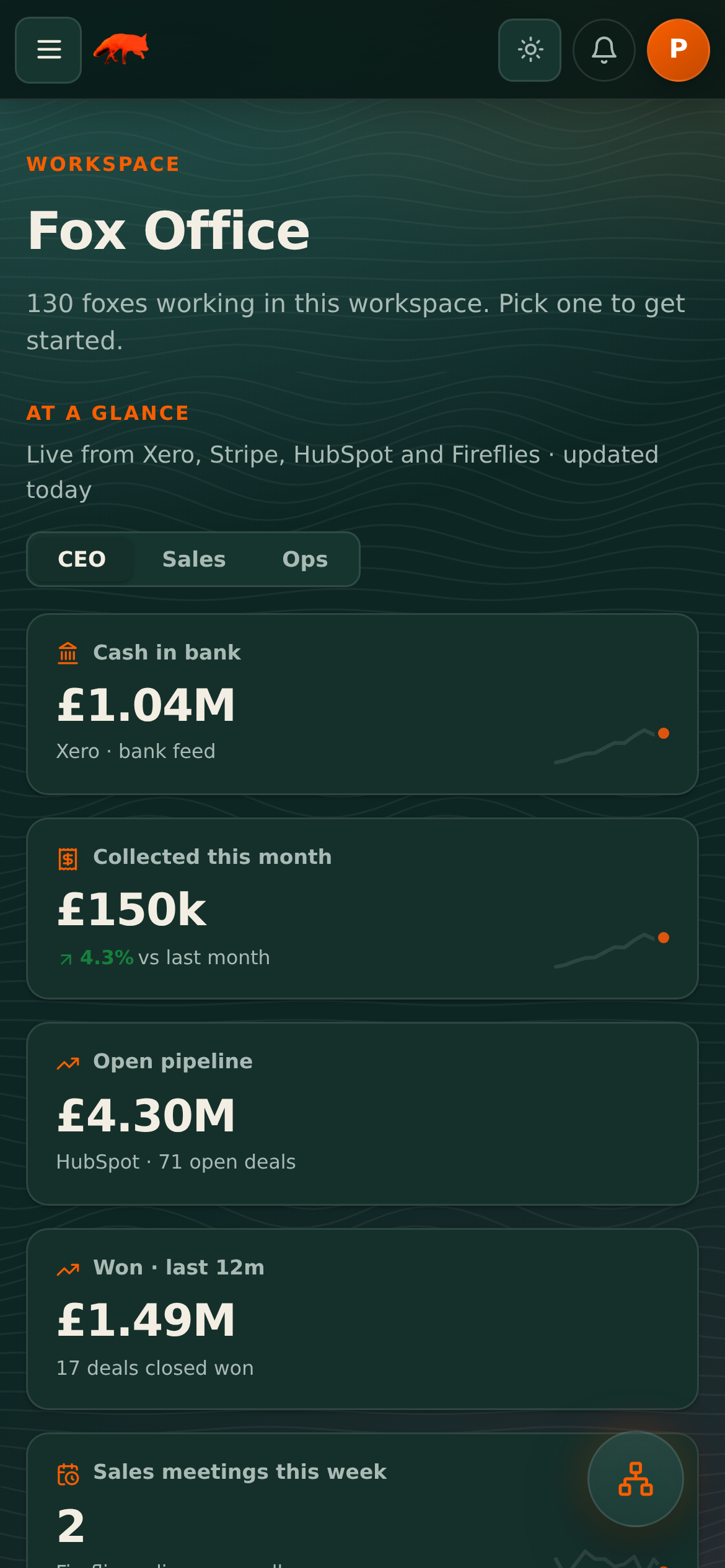
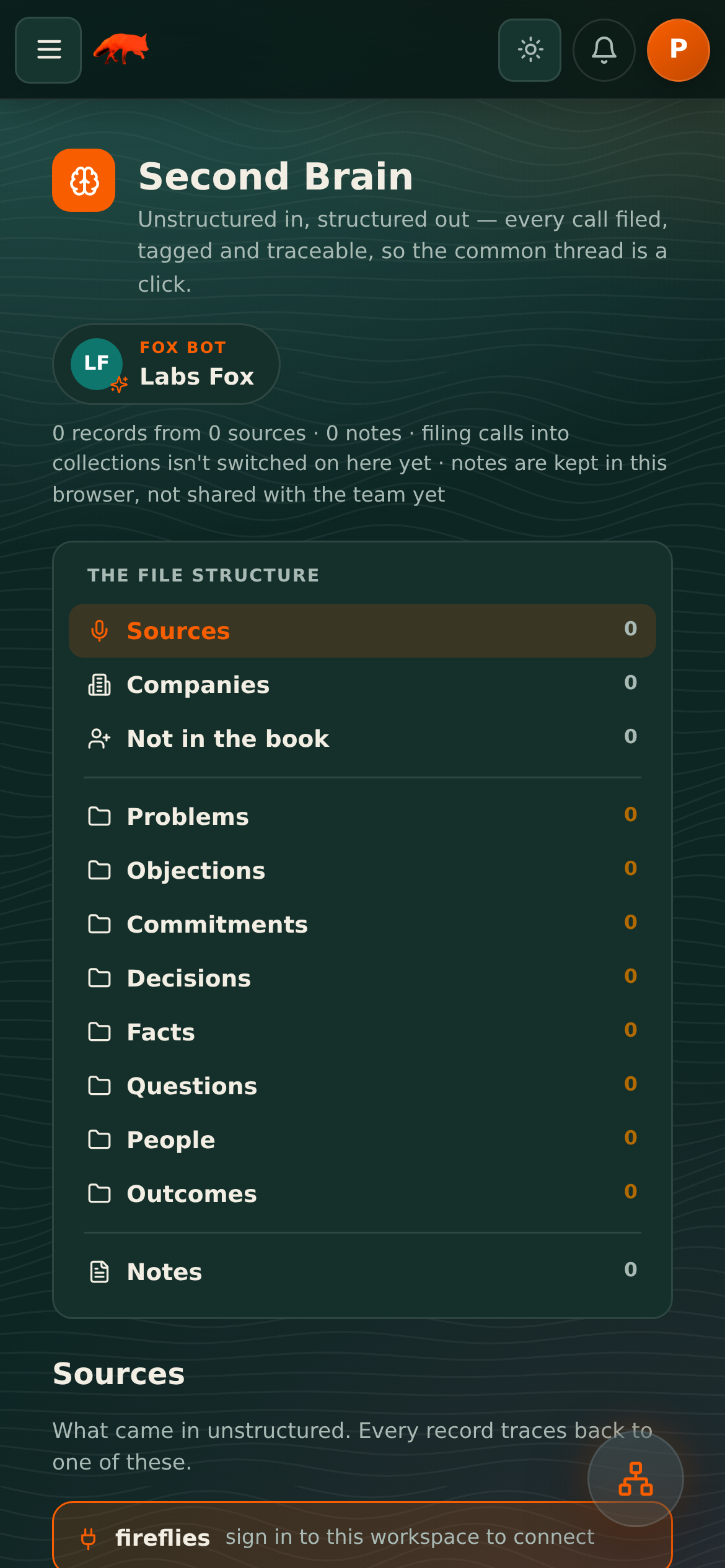
Theme is a preference, not a compromise. Every screen is designed twice.
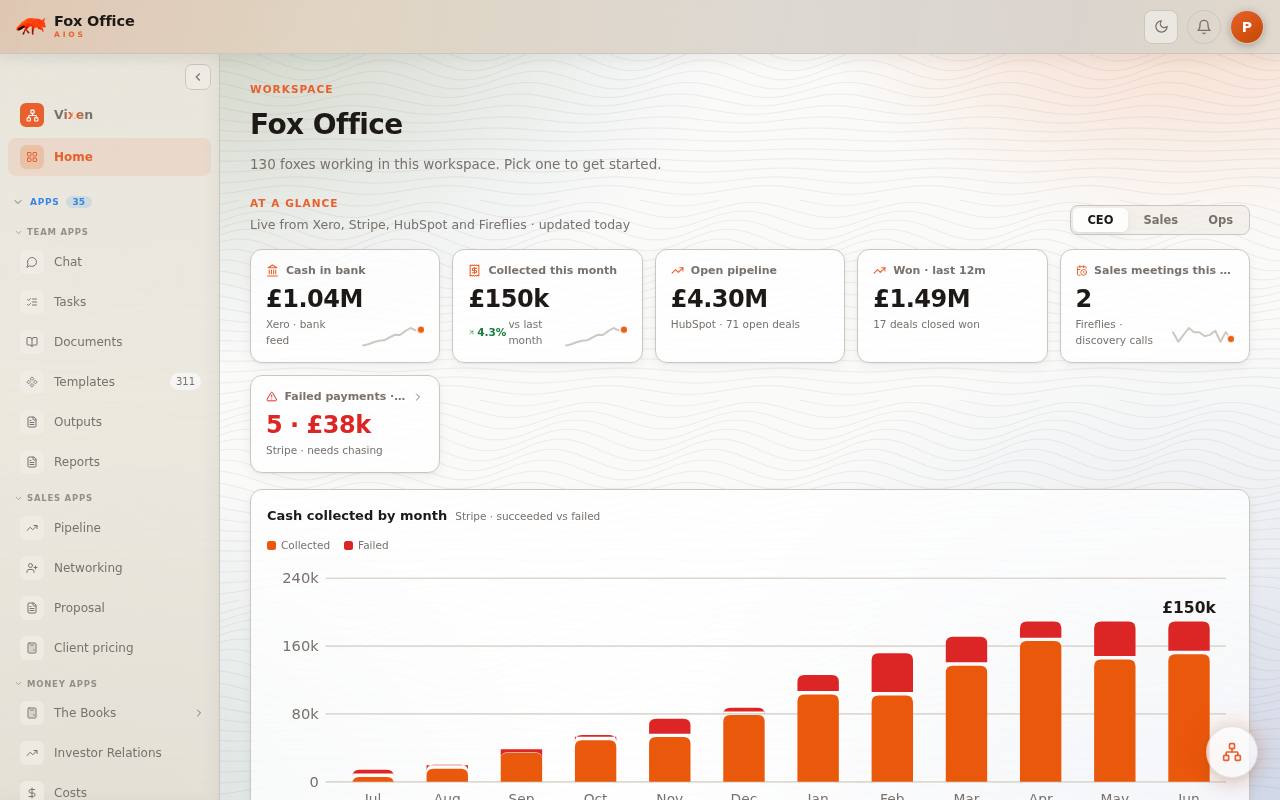
Fox Office is a product, but it isn't a box you're handed. We map how your business actually runs, connect what you already use, and switch on the agents that earn their place.
Fox Office isn't a prototype we're testing on your budget. The apps, the agents and the integration layer run Cleverfox every day. What you see in the screenshots above is our own live workspace.
Agents handle volume. Your team handles judgment. Every agent is switched on deliberately, and every action it takes is visible and auditable. No runaway automation.
Your existing systems stay where they are. Open frameworks, standard protocols, your own accounts, your own data - so you're never trapped in the thing that was meant to free you.
You know what you're paying before we start and what you'll have when we finish. No open-ended retainers, no discovery phase that never ends.
Half an hour with your stack on the table: what's connected, what's manual, and where the agents would earn their keep first.